
More Than a Workout: 5 Life-Changing Benefits of Starting BJJ in KL
- Yi Sheng Tan
- Jan 6
- 3 min read
Let’s be real for a second. You’ve tried the standard gym routine. You’ve paid for a membership that you only use to justify buying expensive smoothies. You’ve spent forty minutes on a treadmill staring at a wall, wondering if this is all there is to life. If your fitness journey feels more like a chore than an adventure, you’re doing it wrong.

If you’re looking for weight loss martial arts or a way to shake up your routine in Kuala Lumpur, it’s time to stop thinking about "calories burned" and start thinking about "skills learned." Brazilian Jiu-Jitsu (BJJ) isn’t just a sport; it’s a total lifestyle overhaul that happens to come with a six-pack as a side effect. Here is why bjj and fitness are a match made in heaven.
1. The Ultimate Physical Transformation (Without the Boredom)
Most people search for weight loss martial arts because they want to shed kilos, but they stay for the "accidental" fitness. In BJJ, you aren't doing 3 sets of 10 reps; you’re wrestling, scrambling, and moving your body in ways nature intended.
Because you’re focused on not getting "tapped out" or trying to master a specific sweep, you don't notice that your heart rate is in the fat-burning zone for a solid hour. One of the biggest benefits of jiu jitsu is that it builds "functional" strength. You’ll develop core stability, grip strength, and cardiovascular endurance that a stationary bike simply can’t replicate. You don’t "get in shape" to do BJJ; you do BJJ to get in shape.
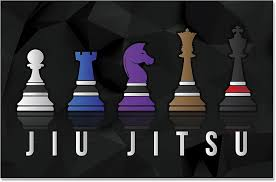
2. Mental Health: Playing "Human Chess"
In the hustle of KL life—from the traffic on Jalan Ampang to the stress of your 9-to-5—your brain is constantly "on." BJJ offers a unique form of "forced mindfulness." When someone is trying to wrap their legs around your neck, you literally cannot think about your unread emails.
This is why BJJ is often called "Human Chess." Every move has a counter, and every position is a puzzle to be solved. This mental engagement is one of the most underrated bjj benefits. It sharpens your problem-solving skills and builds a level of mental resilience that carries over into your professional life. You learn how to stay calm under pressure, breathe through discomfort, and find a way out of a tight spot.
3. A Community That Actually Cares
Let’s face it: the "regular" gym can be a lonely place. You put your headphones in, avoid eye contact, and leave. At AOS BJJ, that’s impossible. You are literally sweating, struggling, and learning with other people. This creates a bond that is hard to find anywhere else in the city.

The KL BJJ community is a melting pot of doctors, students, engineers, and creatives. When you’re on the mats, your job title doesn't matter; your belt rank and your willingness to learn do. You’ll find a tribe that celebrates your progress, pushes you when you’re lazy, and goes for Nasi Lemak after class. It’s the social life you didn’t know your fitness routine was missing.
4. Stress Relief That Actually Works
Some people punch bags to relieve stress; BJJ practitioners prefer to "roll." There is a scientific reason why BJJ is so good for your mood. The combination of intense physical exertion and the "play" aspect of grappling releases a cocktail of endorphins and dopamine that leaves you feeling blissfully exhausted and remarkably chill.
If you’ve been Googling bjj benefits, you’ll find countless stories of people who used the mats to manage anxiety or burnout. There is something deeply cathartic about a sport where you can go 100% against a partner, shake hands, and walk off the mat with a clear head. It’s the ultimate reset button for your nervous system.

5. Longevity and "Real-World" Confidence
The best workout is the one you actually show up for. Unlike high-impact sports that destroy your joints, BJJ can be practiced well into your 50s and 60s if you focus on technique over ego. It’s a hobby that grows with you.
As you get better, you’ll notice a shift in how you carry yourself. That bjj and fitness combo gives you a sense of physical agency. You know what your body is capable of. You know how to move. That confidence isn’t about being "tough"—it’s about being capable. And in a world that’s increasingly unpredictable, that’s the best fitness benefit of all.
Comments